Choosing plants is one of the most enjoyable parts of creating a garden. It is very easy to fall for a beautiful flower at a nursery, spot something wonderful in somebody else’s garden, or start collecting plants simply because you love them.
But a collection of lovely plants doesn’t necessarily make a successful garden.
Good planting design is about understanding how plants will live together, how they will change through the seasons and what they will contribute to the garden long after their flowers have disappeared. It also means thinking about the garden itself – its soil, light, architecture and views – and how the people who live there want to use it.
When a planting scheme works particularly well, much of that thinking is almost invisible. The planting simply feels as though it belongs.
Start with the garden, not the plants
Before I begin thinking about individual plants, I need to understand the garden they are going into.
How much sun does it receive? Is the soil heavy and moisture-retentive or light and free-draining? Is the site exposed? Are there areas of deep shade beneath existing trees? Which parts of the garden are naturally dry, and where does moisture linger?
Even within a relatively small garden there can be several different growing conditions. These are some of the things I look at during a first visit to a garden, before decisions about individual plants are made.
Understanding these things at the beginning makes an enormous difference. Rather than choosing a plant and then trying to persuade it to grow somewhere it doesn’t particularly like, the aim is to find plants that will naturally be happy there.
But growing conditions are only part of it.
The style and age of the house, existing trees, boundaries, views beyond the garden and the way the space is going to be used all influence the planting too. Planting design should feel connected to the wider garden design rather than something added once everything else has been decided.
Think about plants together, not individually
One of the biggest differences between choosing plants and designing with plants is that you stop looking at each one in isolation.
A plant may be beautiful on its own, but what really matters is what happens when you put it beside something else.
Does the foliage provide a contrast? Do the shapes of the flowers complement one another? Will one plant disguise another as it starts to fade? Will they compete for the same space? Will they flower together, or will one take over just as the other finishes?
This is where planting becomes composition.
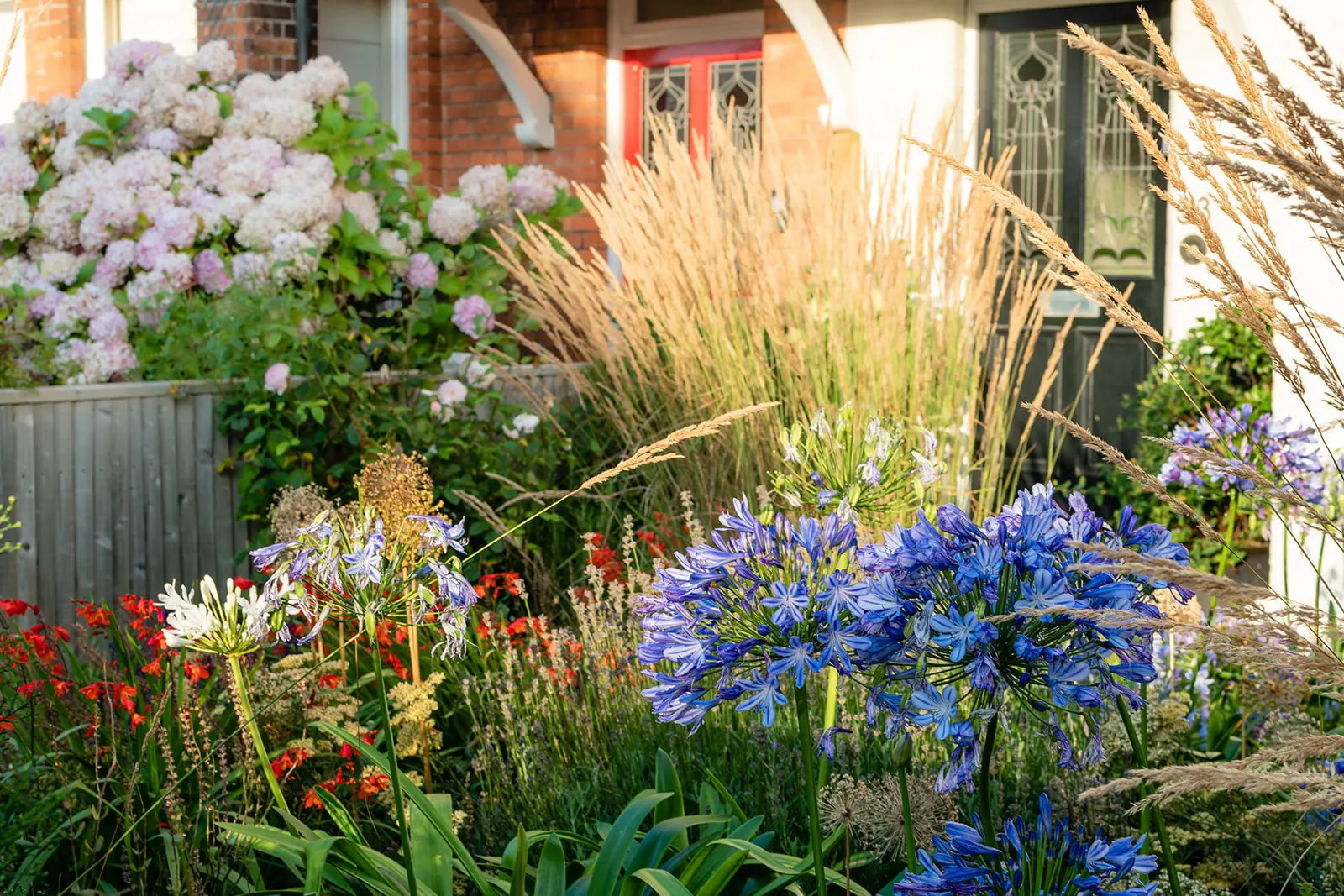
I often use repetition to give a scheme rhythm and continuity, allowing certain plants to reappear through a border rather than introducing something different into every available gap. Other plants can weave between them, creating looser layers and giving the planting a more natural feel.
There is often a temptation to include too many different plants. A little restraint can make a planting scheme feel much calmer and more coherent.
Flowers are only part of the picture
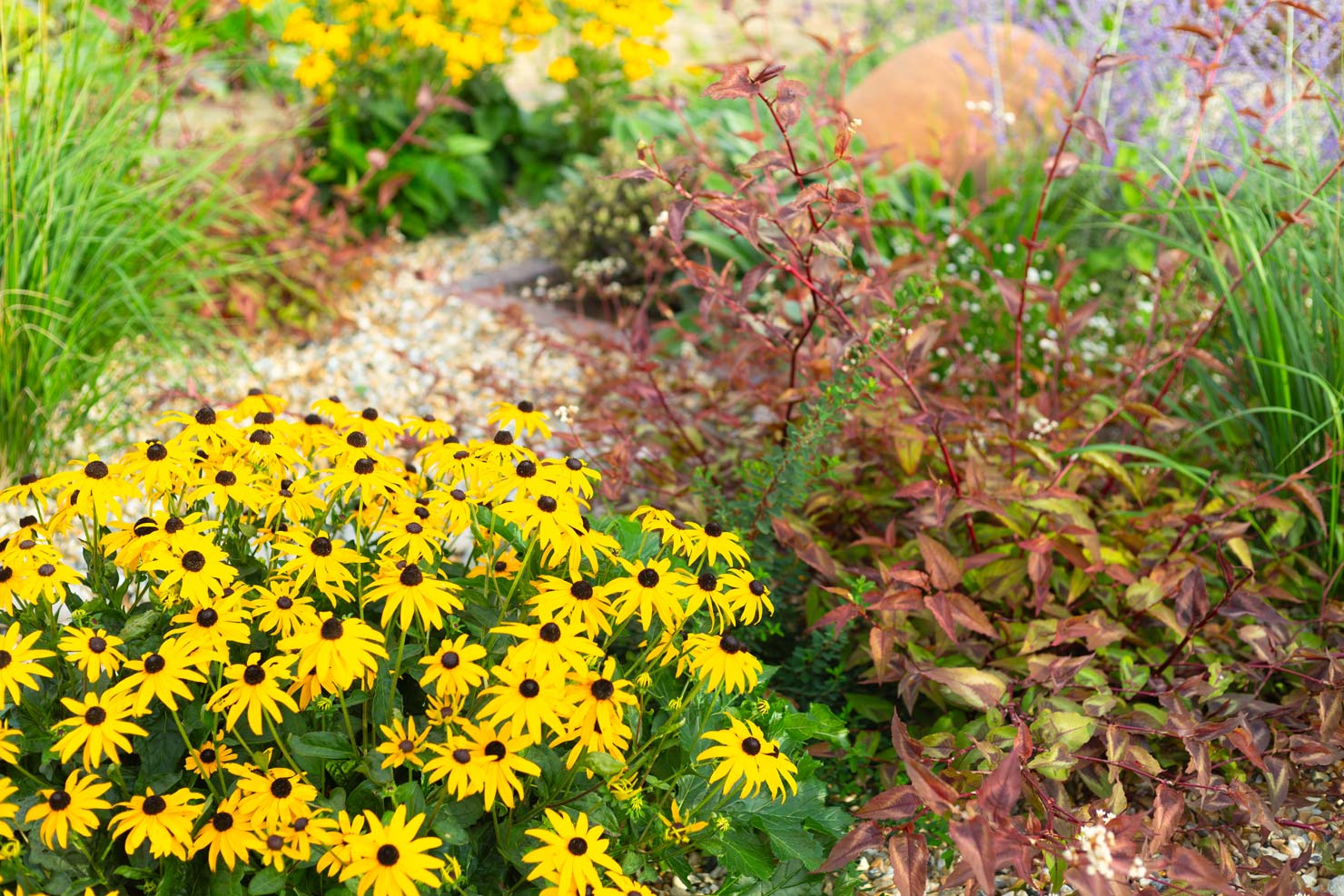
Flowers inevitably attract our attention, but they are only one element of a planting scheme.
Some plants may only flower for a few weeks. Their foliage, shape and structure can be visible for considerably longer, so I give these just as much thought.
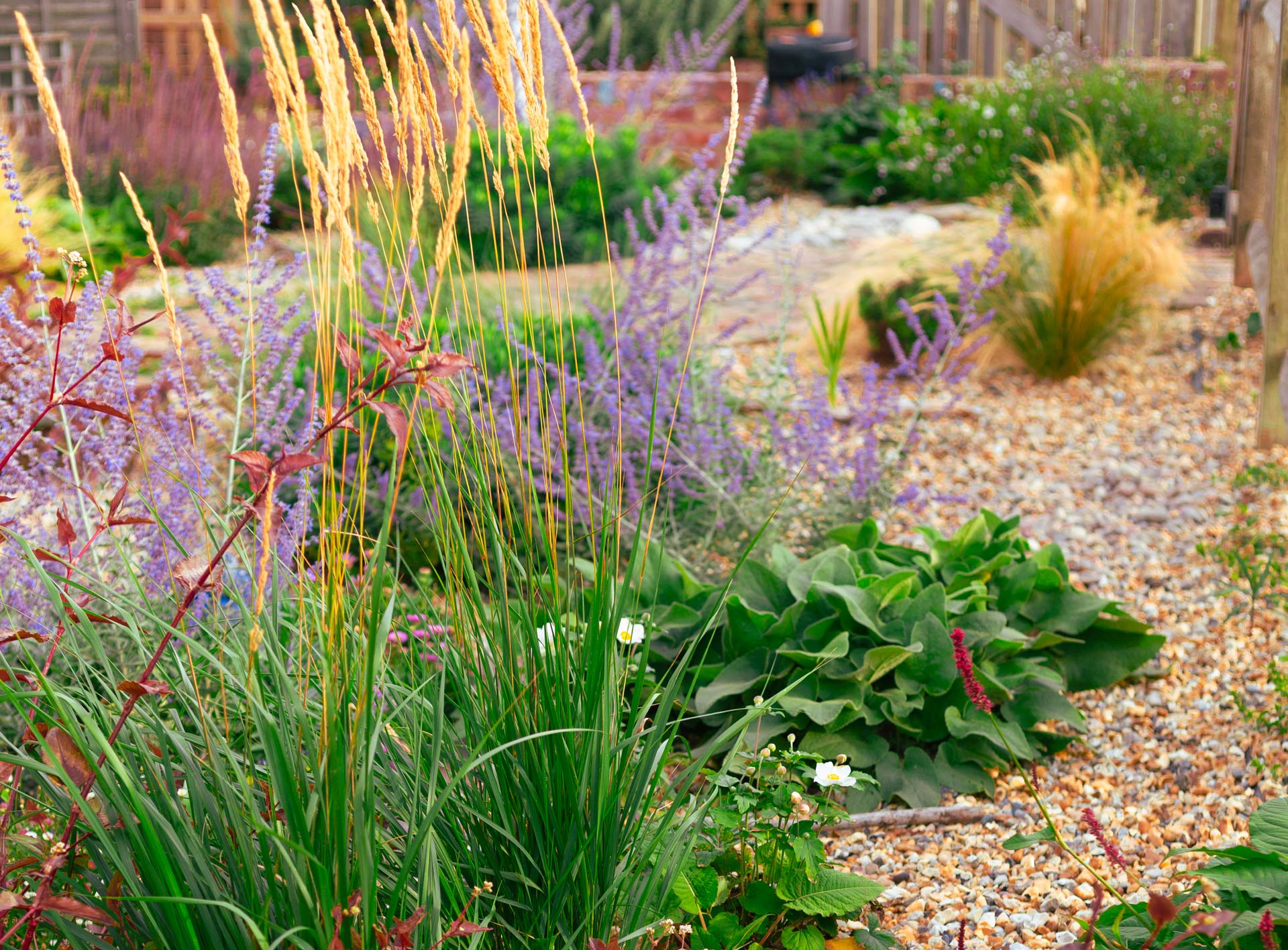
The upright stems of an ornamental grass can provide a completely different character from the broad foliage of a perennial. Fine leaves can sit beautifully against something architectural. Rounded forms can contrast with tall vertical flower spikes.
These differences create depth and interest even when relatively little is actually in flower.
Movement is important too. Grasses and plants carried on fine stems respond to the slightest breeze and can stop a garden feeling static. Their effect changes again when they catch the light.
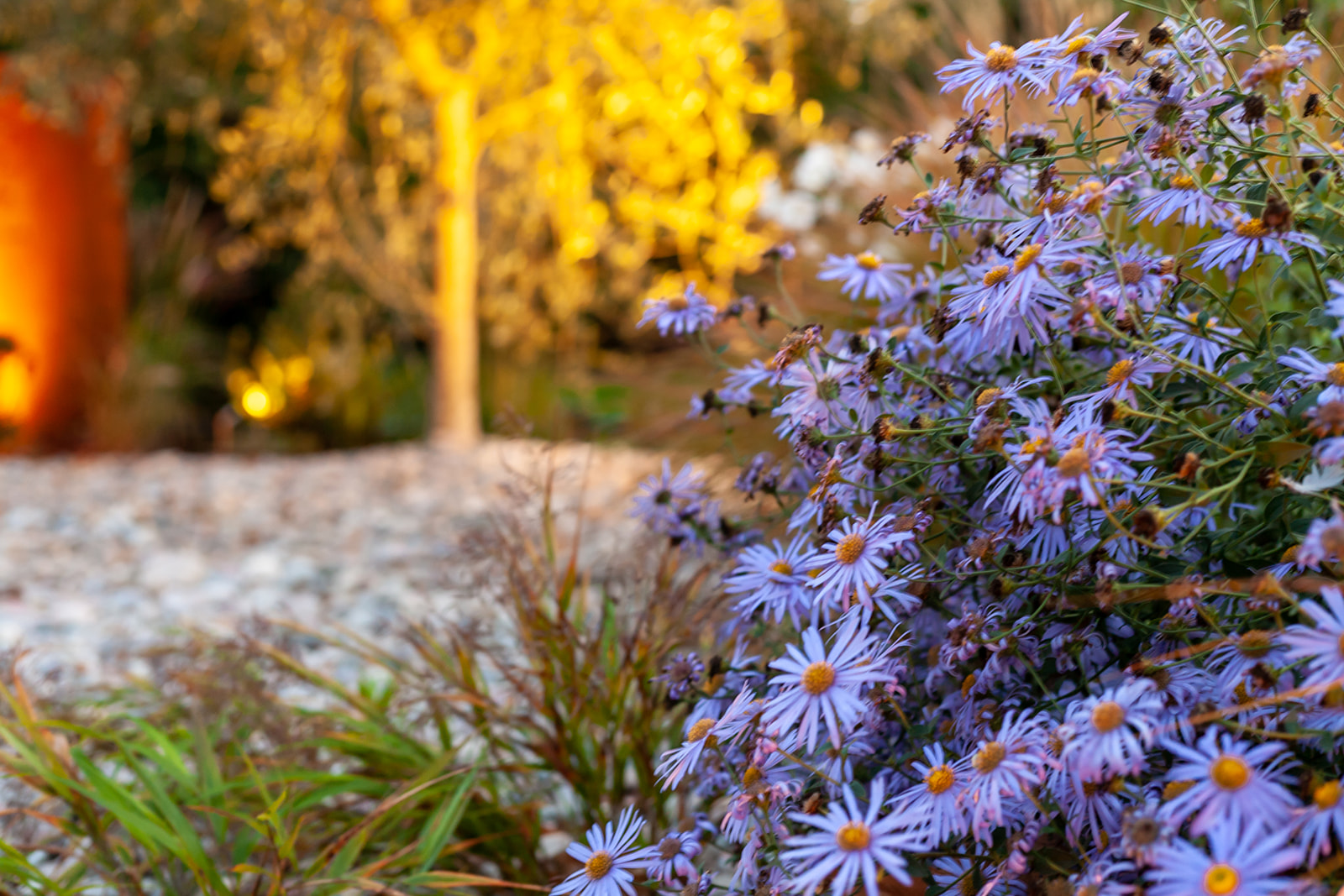
Low morning or evening sun coming through a grass or illuminating the edge of a flower head can be incredibly beautiful. It is one of those small details that can completely alter the atmosphere of a garden.
A planting scheme should change
A garden is never a finished picture.
Spring bulbs emerge and disappear. Perennials grow rapidly, flower and fade. Grasses become taller and softer as summer progresses. Seed heads appear in autumn and, if they are left standing, can continue to give structure well into winter.
This constant change is one of the joys of planting design.
Rather than trying to make everything reach its peak at the same moment, I prefer to think about how interest can move through a garden. As one group of plants begins to fade, something else should be starting to take its place.
That doesn’t necessarily mean flowers in every corner for twelve months of the year. Winter interest might come from the outline of a tree, evergreen foliage, grasses, seed heads or simply the structure of the garden becoming more visible once herbaceous planting has died back.
I’ve written more about this in How Planting Shapes a Garden Through the Season, but the principle is quite simple: the aim isn’t to create one perfect moment. It is to create a garden that continues to offer something as the months change.
Don’t forget the view from inside
We naturally think about how a garden will look while we’re walking through it, but many of the most frequently seen views are actually from inside the house.
A kitchen window may frame the same part of the garden every morning. A sitting room might look directly onto a border. A bedroom window can offer an entirely different view from the ones experienced at ground level.
These sightlines are worth considering when developing both the garden design and the planting.
A particularly beautiful grass might be positioned where it catches the evening light when viewed from the kitchen. Structural planting can draw the eye towards a view beyond the garden. Taller planting can provide privacy where it is needed, while lower planting can deliberately leave another view open.
These are small decisions individually, but together they can make the garden feel much more connected to the house.
Think beyond planting day
New planting can initially look rather sparse.
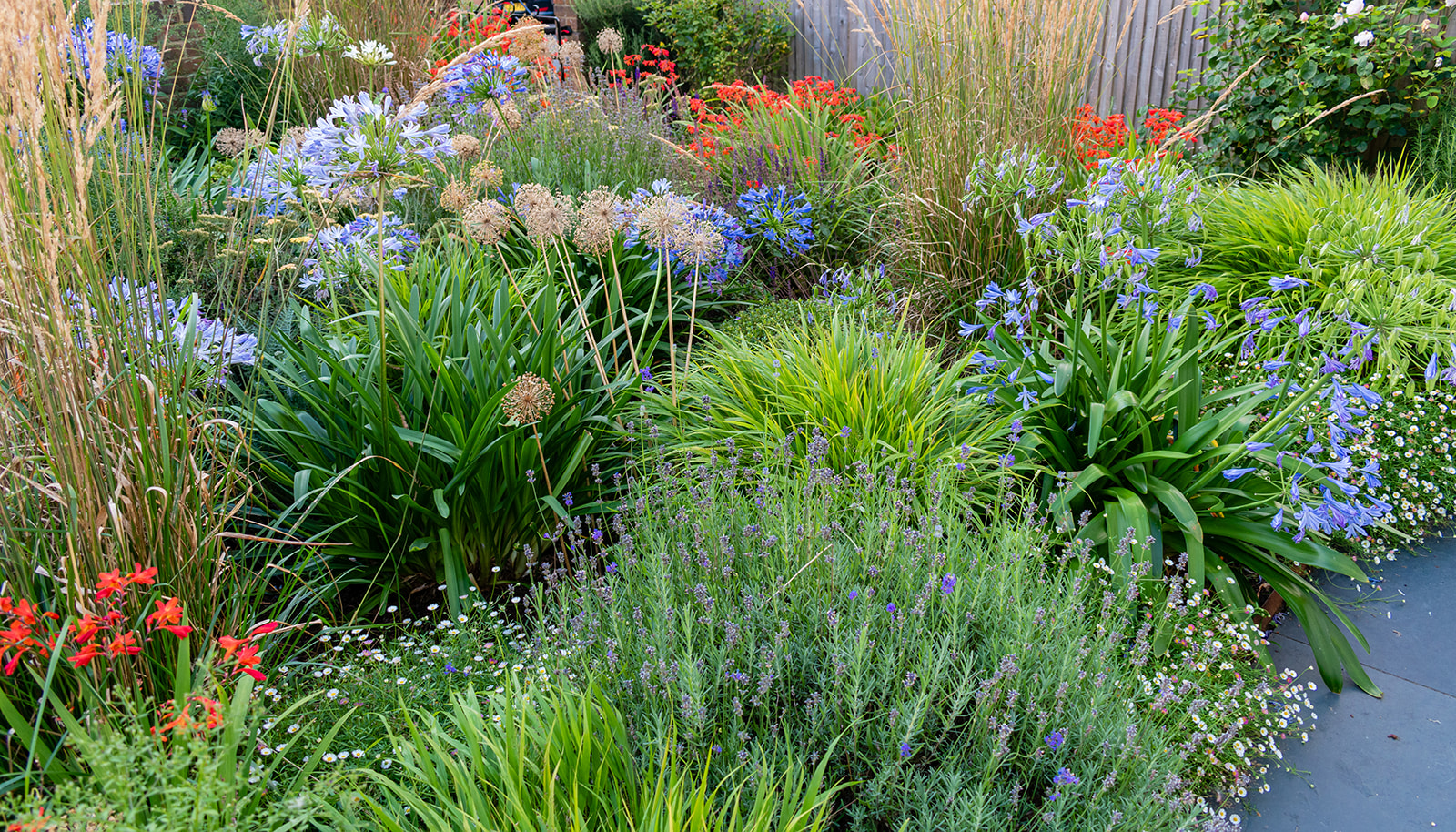
Plants arrive in relatively small pots with large areas of soil between them, and it can be tempting to fill every gap. But I’m not designing the border for the afternoon it is planted. I need to imagine what those plants are going to do next year, and in three or five years’ time.
How wide will that shrub become? Will the perennial beside it still have enough light? Which plants will spread? Which will naturally mingle? Where will the planting eventually knit together?
Spacing is therefore an important part of a planting plan.
Too much space and a scheme can remain disjointed for longer than necessary, leaving bare ground for weeds to colonise. Too little and plants can quickly become overcrowded, with the more vigorous varieties overwhelming their neighbours.
A planting designer is constantly trying to picture a garden that doesn’t exist yet.
Design for the way the garden will really be used
Planting isn’t simply there to be looked at.
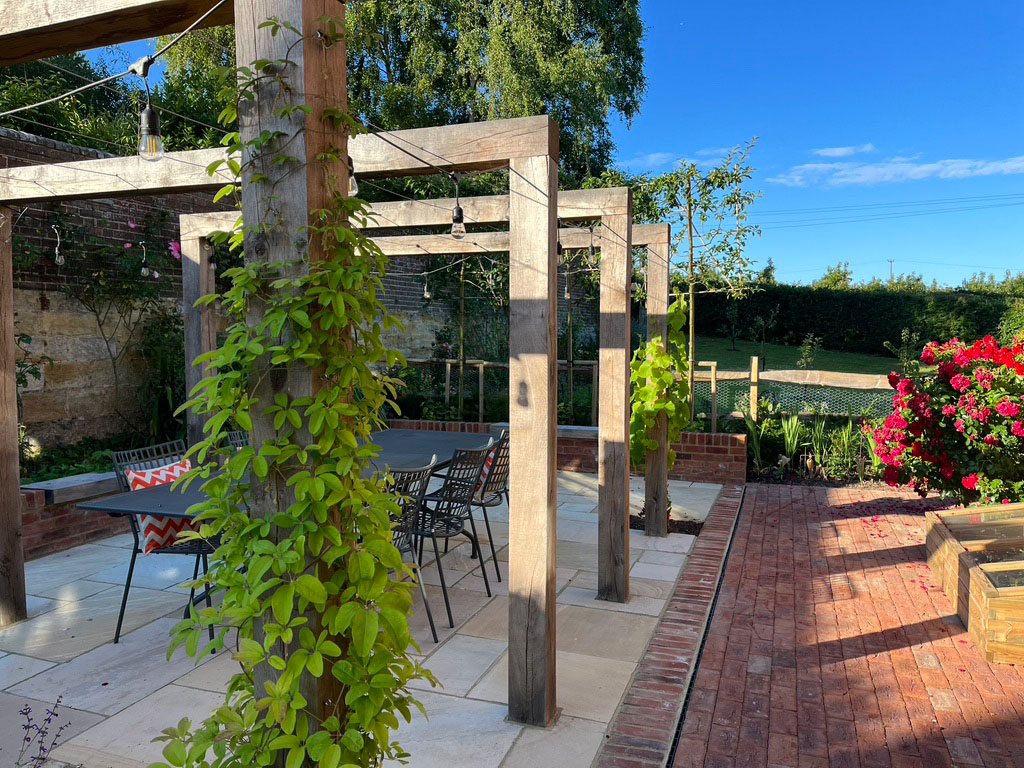
Scented plants can be positioned beside a terrace or somewhere you regularly walk past. Softer planting can spill towards the edge of a path. Taller planting might create a sense of enclosure around a seating area, while grasses moving nearby introduce sound and movement.
Practical considerations matter too.
Some people love spending hours working in their garden. Others want beautiful planting but have very little time to look after it. Neither is right or wrong, but the planting scheme needs to reflect that from the outset.
There isn’t really such a thing as a completely maintenance-free garden. There are, however, planting schemes that can be designed to require less intervention than others.
Understanding how plants grow, spread and compete is an important part of achieving that.
Plant for the garden you have – and the climate we’re experiencing
Recent hot, dry summers have also made plant selection increasingly important.
A successful scheme needs to be resilient enough to cope with the conditions of its particular site. That doesn’t simply mean filling every garden with drought-tolerant plants. A shady, moisture-retentive border will require a very different palette from an exposed sunny one.
It comes back to understanding the garden first.
Choosing plants that are suited to the soil and microclimate gives them the best chance of establishing successfully and ultimately creates stronger planting.
New plants will still need careful watering while their root systems establish, particularly during dry weather, but good planting design shouldn’t rely on continually fighting against the conditions a garden naturally provides.
What does a planting plan actually do?
By the time individual plants appear on a planting plan, many of the important decisions have already been made.
The plan brings those decisions together. It sets out which plants will be used, their quantities, positions, spacing and how different groups will repeat and move through the garden.
But behind that plan are questions about proportion, structure, colour, texture, seasonality, growing conditions, maintenance and how the planting relates to the wider garden.
For a complete garden redesign, the planting plan will usually sit within a much broader set of drawings and decisions. If you’re interested in how those elements fit together, I’ve explained what a garden design plan includes in more detail.
That is why professional planting design is very different from simply producing a list of attractive plants.
Perhaps the best planting schemes are the ones where you don’t immediately notice the design at all. Plants seem to sit comfortably together, different areas connect naturally and there is always something quietly changing as you move through the seasons.
It can feel wonderfully effortless.
Getting it to feel that way usually involves rather a lot of thought.
If you’re planning a new garden or would like to rethink the planting within an existing one, you can find out more about my planting design service, explore my garden design service or get in touch to discuss your garden.