
People often ask when a garden looks its best.
The answer they expect is usually summer. Roses out. Borders overflowing. Everything performing exactly as planned.
But gardens rarely behave quite that neatly.
Spend enough time watching them and you start to notice something else entirely. The interesting ones never peak in just one moment. They move instead. Gradually. Quietly.
In early spring the garden can still look half asleep. Bare soil in places. Shrubs that haven’t quite decided whether winter is finished.
Then small things begin to appear.
Snowdrops first. Hellebores not far behind. Little signs of life pushing through the ground as if testing the weather.
A week later the picture has changed again.
Fresh foliage appears where nothing seemed to be happening before. Perennials stretch upwards. Grasses begin to stir in the breeze and suddenly the garden feels as though it has woken up properly.
By midsummer it is something else entirely. Full. Generous. Occasionally a little chaotic, if the plants have had a good season.
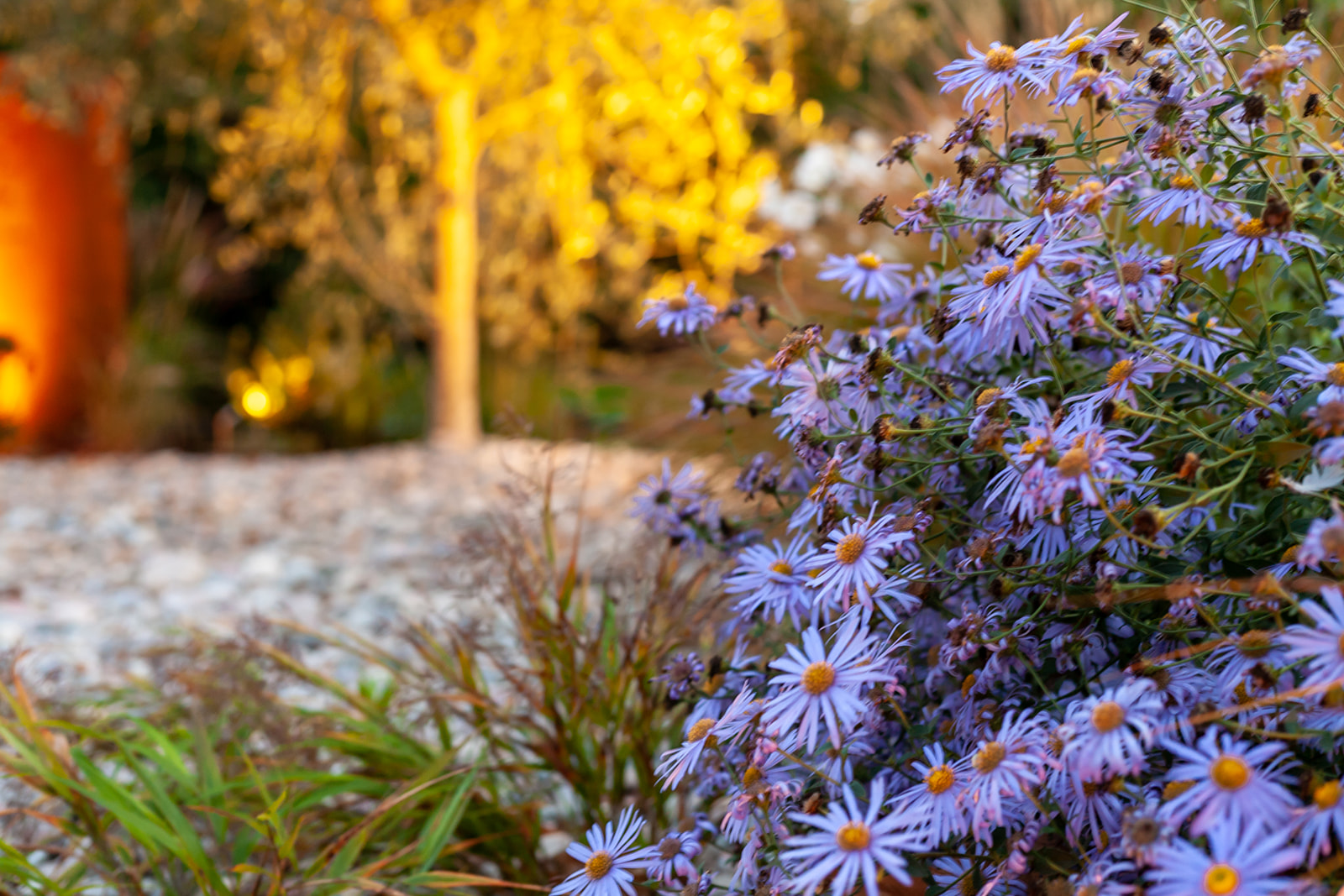
Then autumn arrives and the whole mood softens again.
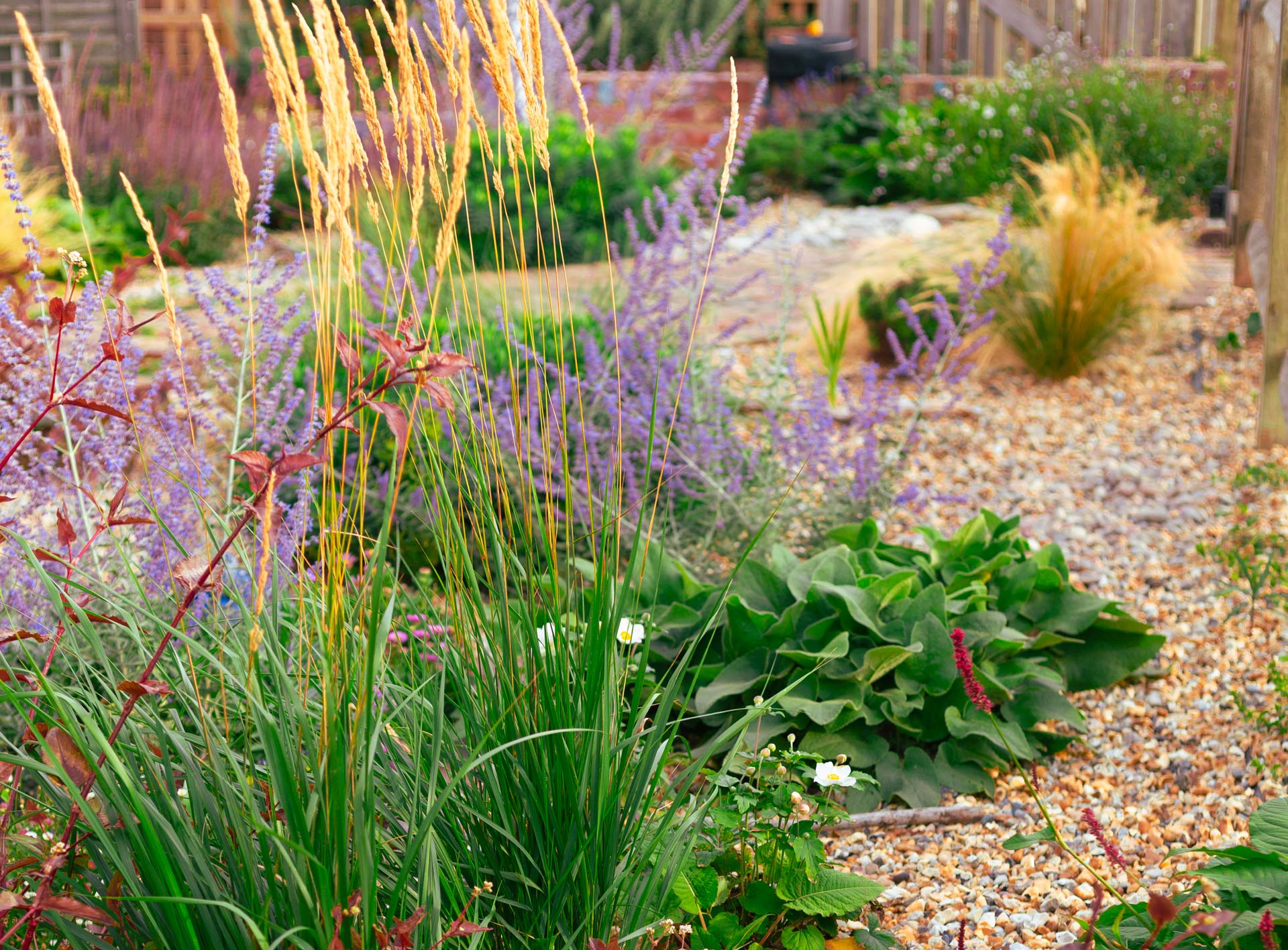
Seed heads catch the low sunlight. Colours deepen. The pace slows before winter strips everything back to its bones.
And this, really, is what planting design is about.
Not a single moment of colour.
But the way a garden unfolds over time.
What Exactly Is Planting Design?
It sounds like a straightforward question.
In simple terms it is deciding what grows where. But that explanation only goes so far.
Most gardens begin with a fairly relaxed approach. Plants are chosen because they look appealing at the garden centre or remind someone of another garden they admired.
Sometimes it works perfectly well for a year or two.
Then the problems begin to show.
A border that looked delightful in June suddenly feels empty by October. Or everything grows so enthusiastically that within three seasons the plants are competing for space.
Planting design tries to anticipate those moments before they happen.
Instead of focusing on a single spectacular display, the aim is to keep the garden moving forward.
Spring bulbs fade and early perennials take their place. Summer flowers follow. Later still, grasses and seed heads begin catching the autumn light.
The scene keeps shifting.
Which is exactly the point.
Does a Garden Need Flowers All Year Round?
Not necessarily.
This surprises people.
Designers tend to start somewhere else entirely. Structure.
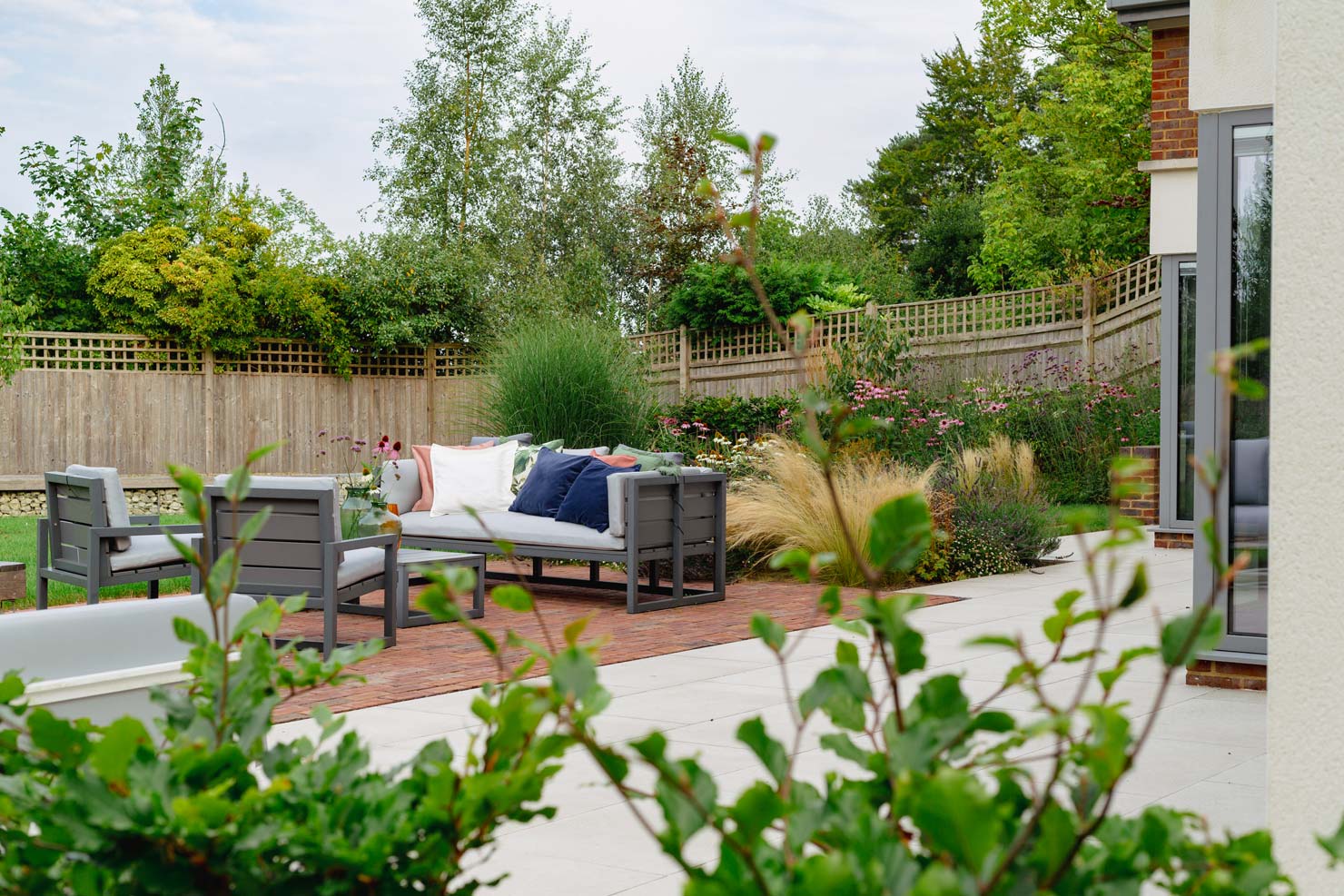
Even in the middle of winter, when the borders have been cut back and colour has largely disappeared, a well-designed garden should still feel composed.
Trees and shrubs carry much of that responsibility. Evergreens especially. They give the garden shape when everything else has retreated.
If you walk through a garden in January and it still feels balanced, chances are the underlying structure has been carefully considered.
Flowers come and go.
Structure stays.
Why Do Some Borders Always Look Full?
Often the answer is layering.
In the natural world plants rarely grow in tidy lines. They organise themselves in layers instead. Taller plants above. Others filling the space beneath.
Garden planting borrows heavily from this pattern.
A border might contain a small tree providing height. Shrubs creating substance. Perennials weaving between them. Grasses bringing movement.
Lower plants soften the edges and help everything connect.
Without this layering something always feels slightly missing.
Even if the plants themselves are beautiful.
Why Do Some Gardens Feel Interesting All Year?
Usually it comes down to timing.
Different plants have their moment at different points in the year.
Spring begins quietly enough. Snowdrops. Crocus. Then tulips pushing upwards with far more confidence.
Early perennials follow close behind.
By summer the borders reach their most exuberant stage. Roses, salvias, geraniums and countless others competing for attention.
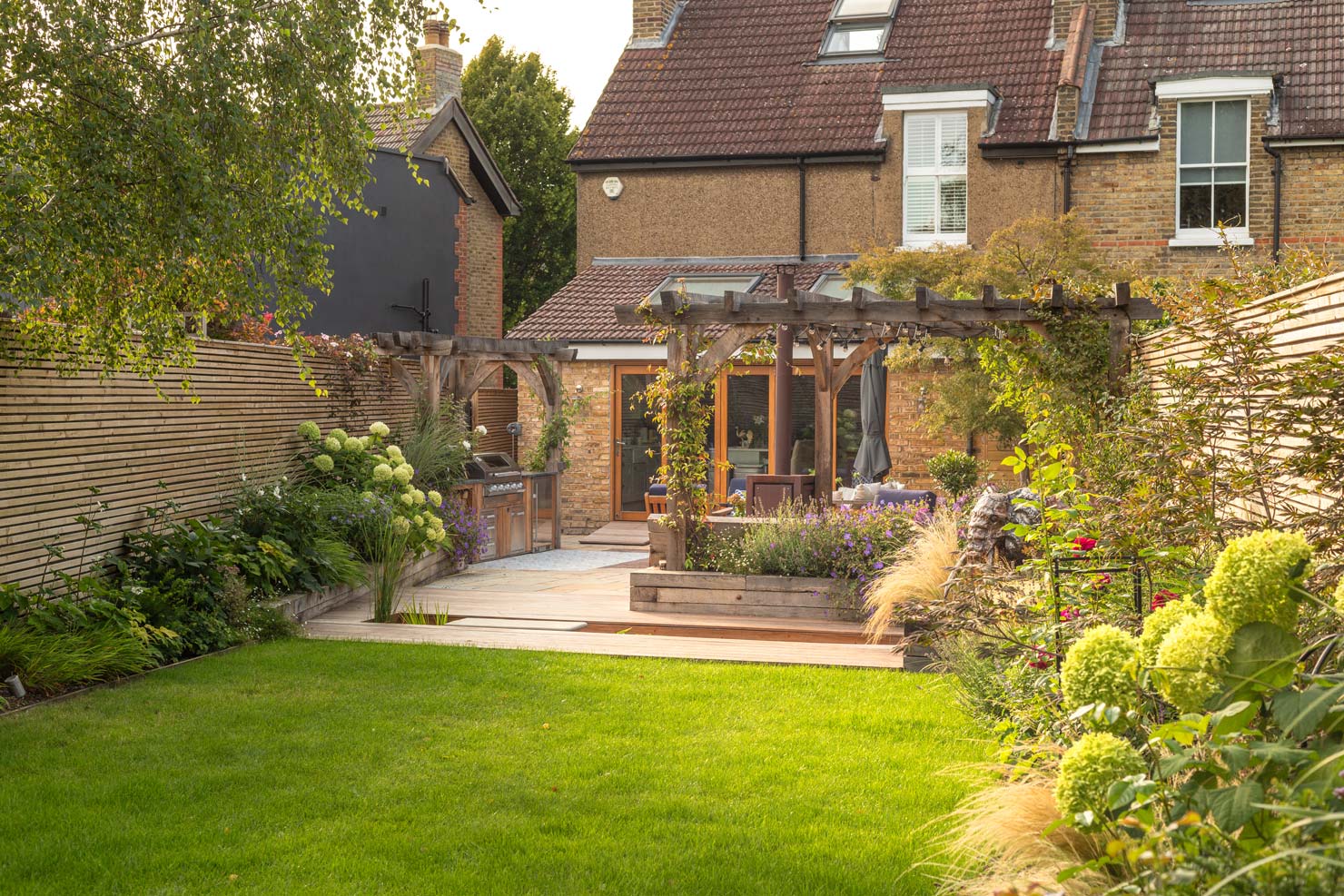
Later still the atmosphere changes again.
Ornamental grasses start to dominate. Seed heads catch the lower autumn sun. The colours become softer, richer somehow.
And even winter has its moments.
Evergreen foliage. Sculptural stems. Bark colour that only really stands out once the leaves have gone.
It is a quieter kind of beauty. But no less interesting.
Where Does Colour Fit Into Planting Design?
Colour matters of course. But it is only one part of the picture.
Planting design also pays attention to texture and form.
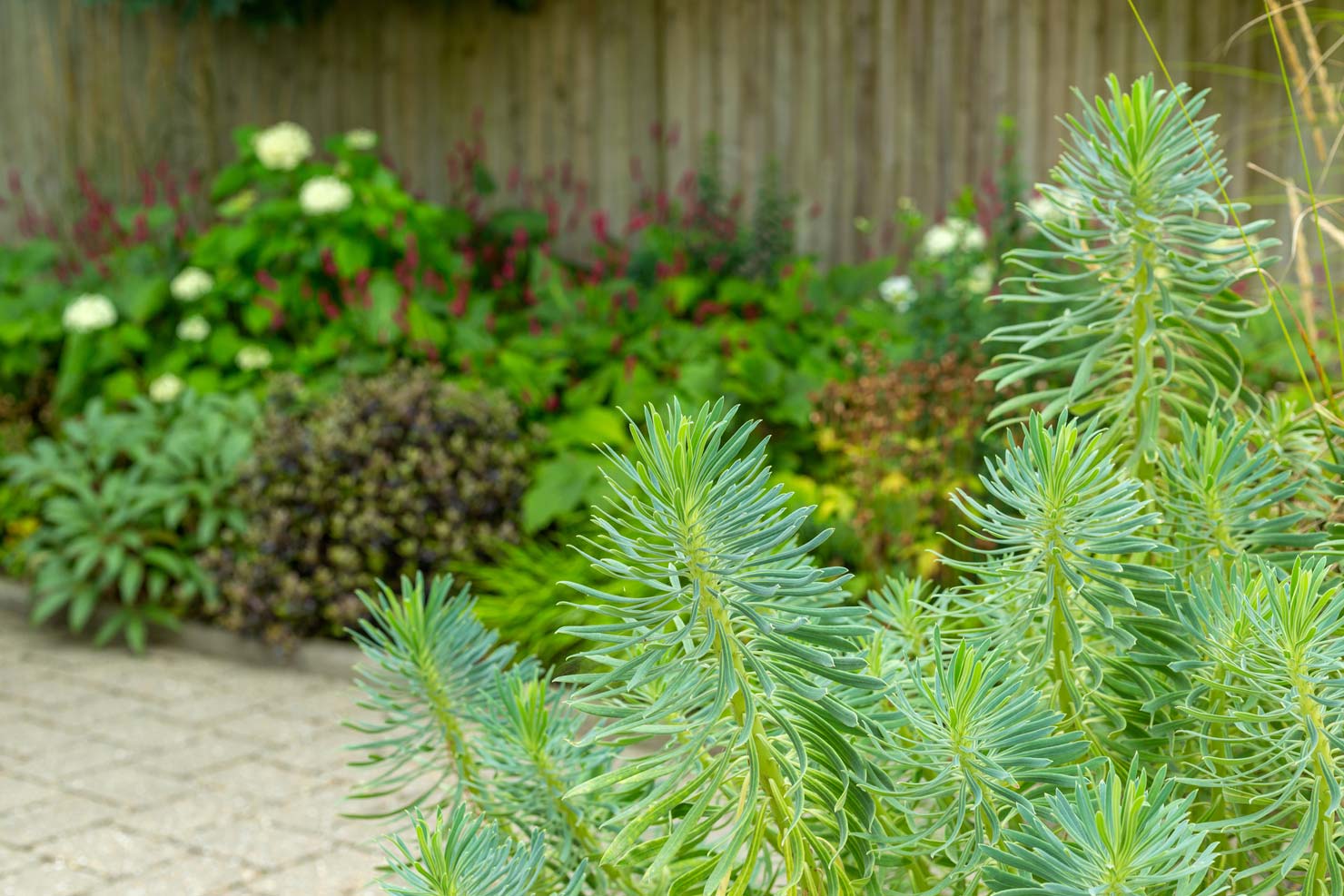
Fine grasses moving beside broad leaves. Upright flower spikes rising through softer planting. Fern-like foliage next to glossy shrubs.
These details rarely shout for attention.
But they shape the character of a garden more than most people realise.
On a grey winter morning, when almost nothing is flowering, those shapes suddenly become the main event.
Designing Planting That Evolves Over Time
Plants also change more than people expect.
This is perhaps the trickiest part of planting design.
Plants grow. They spread. Occasionally they disappear altogether.
A border that feels light and delicate in its first year might become almost lush after three or four seasons.
Without some thought early on things can quickly become overcrowded.
Planting design tries to imagine that future garden.
Spacing matters. So does choosing plants that behave well together over time.
It requires patience.
And sometimes a bit of imagination too.
Because the most satisfying gardens rarely shout the loudest.
They simply keep changing.
Spring brings freshness.
Summer abundance.
Autumn warmth.
Winter structure.
Then the whole cycle begins again.
And somewhere along the way the planting plan becomes something more interesting – a living garden shaped by weather, growth and time.
Planting Design Services
If you are thinking about refreshing the planting in your garden or developing a new planting scheme, you can learn more about Julia Keem’s planting design service here:
https://juliakeemdesign.co.uk/planting-design/
Thoughtful planting design allows a garden to evolve through the seasons, bringing structure, colour and interest throughout the year.