Every year it happens.
The first properly warm weekend arrives sometime in spring. The doors get thrown open, somebody carries a coffee into the garden, stands there for a minute and suddenly notices all the things they’d managed to ignore through winter.
The tired lawn.
The awkward patch near the fence.
The lack of somewhere comfortable to sit in the evening.
Sometimes it’s less obvious than that. The garden simply doesn’t feel connected to the house anymore. It feels unfinished somehow. Flat. Underused.
That’s usually the point people begin thinking seriously about a garden redesign.
The irony is that spring, when interest in gardens peaks, is often the moment many designers and contractors are already heavily booked.
The Best Garden Projects Usually Start Earlier Than People Think
Most successful garden projects begin quietly in autumn or winter.
Not because gardens look their best then. Quite the opposite sometimes. Borders have collapsed. Trees are bare. The weather is damp. But professionally, it’s often the most revealing time to study a space.
Winter exposes things summer disguises.
You see where water sits after heavy rain. You notice which areas feel overlooked once foliage disappears. Low sunlight suddenly highlights awkward angles, dark corners and gaps in privacy that were hidden in July.
Clients occasionally apologise for their garden looking bleak during a winter consultation. Honestly, that’s often when a garden tells you the most.
You stop looking at flowers and start seeing structure.
And structure is what makes a garden work long term.
Why Autumn and Winter Are Ideal for Garden Design Planning
A proper garden design project involves far more than selecting paving or choosing a few plants.
Before any construction starts, there are usually site visits, surveys, concept plans, layout revisions, planting discussions, material choices and technical considerations happening in the background.
Drainage.
Levels.
Access.
Sunlight.
How people move through the space.
Where they naturally pause or gather.
The best gardens tend to feel calm and effortless because those details have been resolved carefully before work begins on site.
That process takes time.
Starting earlier creates room for better decisions. There’s less pressure to rush layouts or compromise on materials simply because spring has suddenly arrived and everyone wants the garden finished immediately.
Good Contractors and Designers Often Book Months Ahead
This is the practical side people rarely think about until it’s too late.
Experienced garden designers and landscape contractors are often booked several months in advance, especially for spring and early summer projects. By April, many schedules are already fairly committed.
Waiting until late spring to start planning can sometimes push construction into late summer or autumn.
That doesn’t mean projects cannot start later in the year. They absolutely can. Some gardens are phased gradually over time and work brilliantly that way. But where possible, earlier planning nearly always leads to a smoother process.
And usually a calmer one too.
Nobody enjoys making expensive decisions in a panic.
Winter Is Often Better for Design Thinking Than Summer
There’s something about winter that encourages clearer thinking in gardens.
Without everything in full leaf competing for attention, the underlying shape of the space becomes easier to understand. Paths, sightlines, boundaries and proportions all become more obvious.
You begin noticing how the garden actually functions rather than simply how it photographs in peak summer.
That distinction matters.
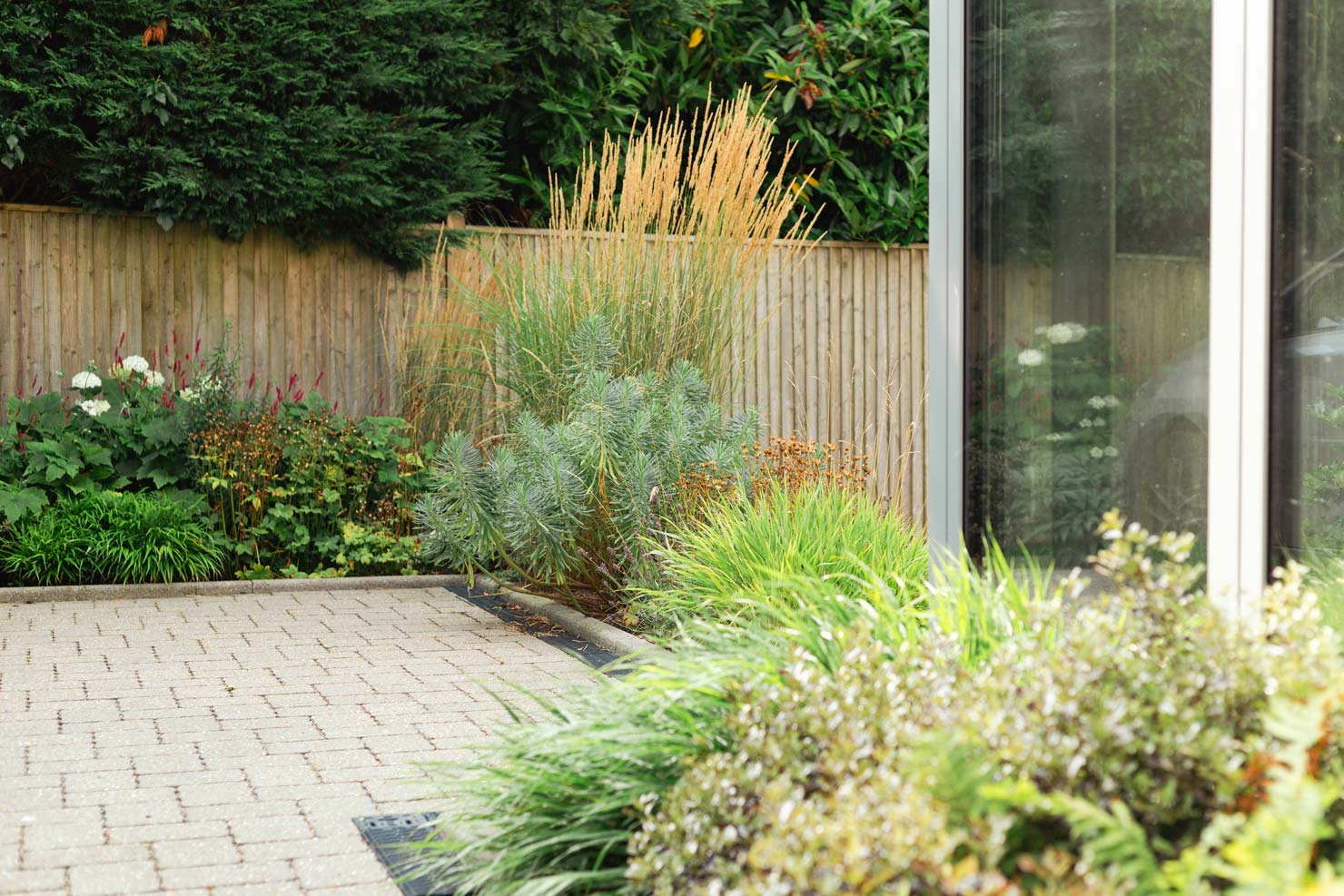
A garden that works beautifully in every season is rarely built around flowers alone. The strongest gardens rely on form, texture, movement and structure first. Planting then softens and enriches the framework around it.
That’s often why naturalistic gardens feel so comfortable and settled. They aren’t trying too hard.
Gardens Need Time to Settle Properly
Planting is another reason timing matters.
Even the best planting design schemes need time to establish. Some gardens settle surprisingly quickly. Others evolve gently over several seasons, softening year after year until they feel completely at home in their surroundings.
That gradual change is part of the pleasure.
People sometimes expect a newly finished garden to look fully mature immediately. Occasionally that’s possible with larger specimen planting, but most beautiful gardens reveal themselves more slowly.
The first year is often about establishment.
The second year brings confidence.
By the third year, the garden usually starts feeling like it truly belongs there.
For more on how planting changes throughout the year, read How Planting Shapes a Garden Through the Season.
So, When Should You Start a Garden Design Project?
If your hope is to enjoy a redesigned garden by summer, autumn and winter are usually the best times to begin the design process.
Not because gardens are at their most beautiful then, but because good gardens are rarely rushed.
The most successful projects nearly always begin with careful planning, thoughtful conversations and enough time for ideas to develop properly before construction starts.
A garden should feel connected to the house and to the people using it. It should feel comfortable in all seasons, not just for a few weeks in June.
And those kinds of gardens almost always begin long before the first plant goes into the ground.
If you’re considering a future project, you can explore the garden design service, browse recent work in the portfolio, or get in touch through the contact page.