I was recently featured in Priceless Magazine, which gave me a moment to stop and think about how I actually work.
Not the polished version. The real version.
What shapes my designs. What clients experience. And why some gardens feel right, while others never quite settle.
If you’re thinking about working with a garden designer, this will give you a clearer picture of how I approach things.
How I Became a Garden Designer
This wasn’t a childhood dream.
Back in 2008, I was in an office job that didn’t feel like it was going anywhere. Around the same time, I started paying more attention to my own garden. Nothing dramatic – just noticing what worked, what didn’t, what changed through the seasons.
That curiosity stuck.
I enrolled at Hadlow College, and pretty quickly it became obvious this was something I wanted to take seriously.
Then came Great Dixter.
I was lucky enough to win a scholarship and spend time training there. If you know it, you’ll understand why that matters. It’s not just a garden – it’s a way of thinking about plants, structure, and how a space evolves over time.
I also worked on two of James Wong’s Chelsea Flower Show gardens, which was a completely different kind of intensity. Fast-paced, high pressure, but incredibly useful.
Somewhere in the middle of all that, it stopped being an interest and became the direction I was heading in.
My Design Style and Planting Approach
Every project starts the same way.
What’s already here?
The house, the materials, the surrounding landscape, even a glimpse of something beyond the boundary – it all matters. I’m not trying to impose something new for the sake of it. The aim is to make the garden feel like it belongs.
I tend to lean towards natural materials. Clay brick, stone, softer textures that sit quietly rather than shout for attention.
Then the planting comes in and changes everything.
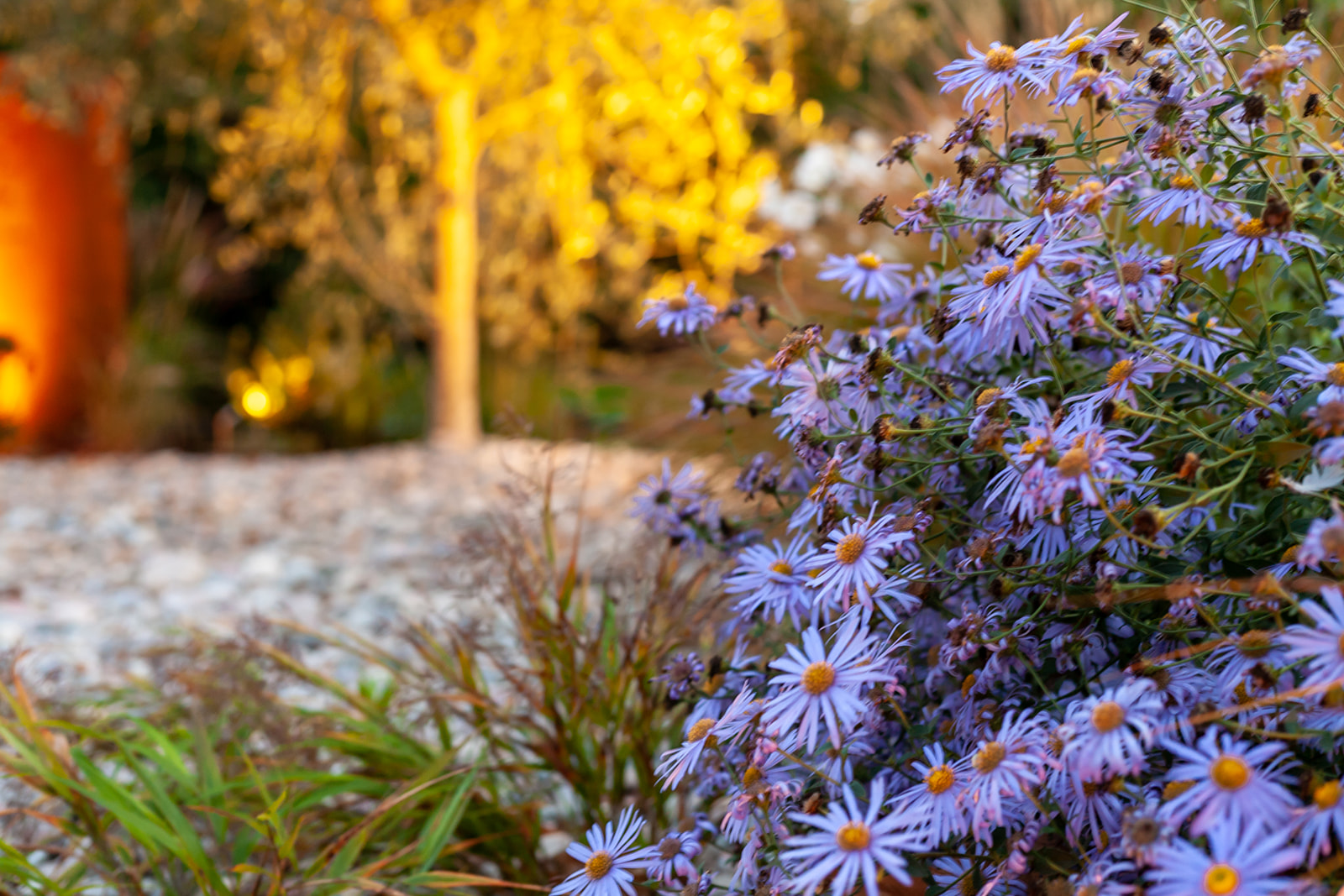
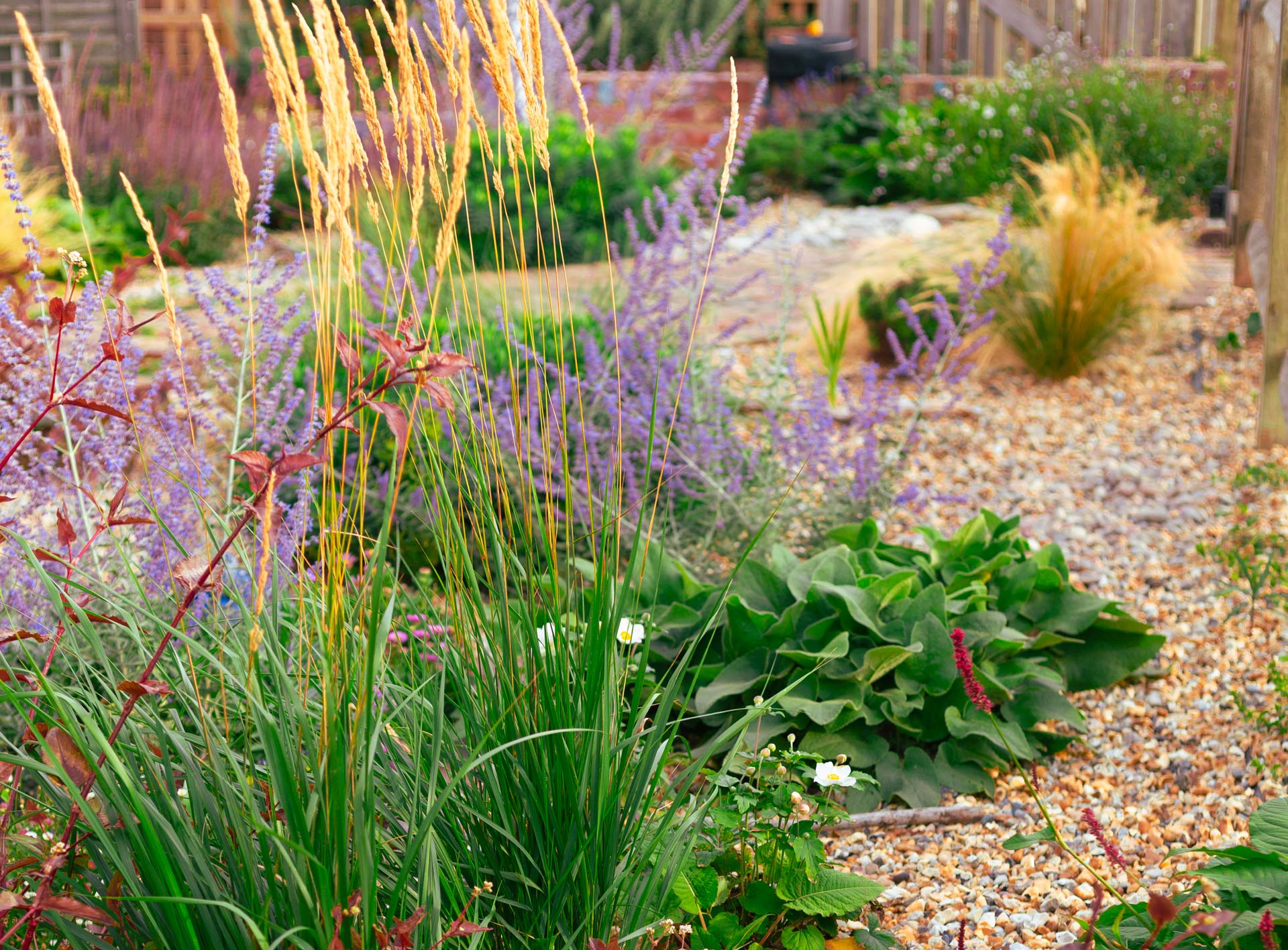
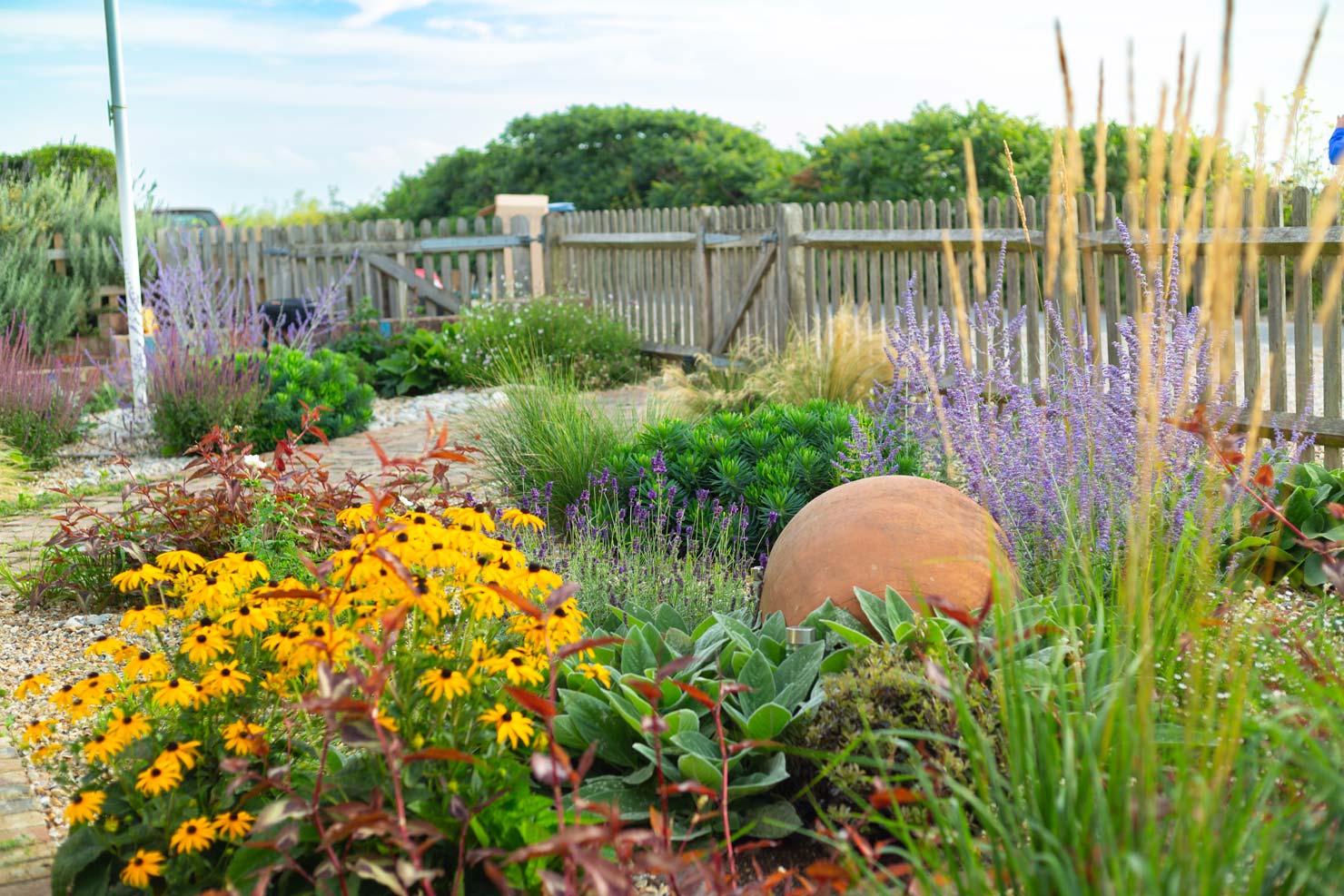
I like planting that moves. Tall grasses catching the light, perennials shifting through the seasons, layers that build depth rather than a flat, static look. You should feel like you’re moving through it, not just looking at it from a distance.
At its best, a garden doesn’t feel staged. It feels settled.
What It Actually Feels Like to Go Through a Garden Project
People often expect the big moment to be the day everything is finished.
It isn’t.
The real moment comes later.
Usually the second season, when everything has had time to bed in. The initial disruption has passed, the planting has started to establish, and the garden begins to do its own thing.
That’s when clients relax into it.
You see them using the space differently. Sitting in places they hadn’t thought about. Noticing small details. There’s a shift from “project” to something much more personal.
That’s the point where it works.
If you’re trying to understand what’s involved before getting to that stage, you can read more about the process here:
What does a garden design plan include?
Why People Bring in a Garden Designer
Most clients don’t come with nothing.
They’ve saved ideas. Screenshots. Things they’ve seen on holiday or in other gardens. There’s usually a strong sense of what they like.
But it’s scattered.
The difficult part is pulling all of that into something coherent.
That’s where I come in.
It’s not just about choosing plants or materials. It’s about shaping a space so everything works together – layout, levels, movement, structure, and how the garden will actually be used day to day.
There’s also the practical side that people don’t always think about at the start.
Budget control. Sequencing the work. Bringing in the right people at the right time. Without that, projects can drift or become more expensive than they need to be.
Choosing the Right Garden Designer
This part matters more than most people expect.
You’re not just hiring someone to produce drawings. You’re choosing someone you’ll work with over a period of time, often on something that matters quite a lot to you.
So take your time with it.
Look properly at their work. Not just the best images, but the overall feel of it. Is there consistency? Does it resonate?
Read about them. How they talk about what they do usually tells you a lot.
And then meet them.
There needs to be a level of ease in the conversation. You should feel like you can say what you think, and that it’s being understood.
It’s not that different from choosing the right plant for the right place. Get the conditions right, and things tend to work.
A Garden That Still Stays With Me
There’s one project near Rye that I still think about quite a lot.
It’s not over-designed. That’s probably why it works.
Winding gravel paths, a simple pergola, a dining area that looks out across open landscape. There’s a wildlife pond, and the planting leans towards Mediterranean and tropical, but in a way that still feels grounded in the setting.
It’s a garden you move through slowly.
You notice different things depending on the time of day, the weather, the season. It doesn’t reveal everything at once.
Those are the gardens I’m most interested in creating.
My Own Garden
At home, the connection between the house and the garden was always going to be important.
We renovated a farmhouse in Kent, and the garden grew alongside that process. Views are framed from inside, and the planting wraps around the building in a way that softens everything.
There’s structure from evergreen planting and grasses, then layers of seasonal planting coming through.
We inherited a number of old apple trees from what used to be an orchard. They’ve stayed, and they give the whole space a sense of age that you can’t really recreate.
Part of the garden is left looser – more meadow than lawn. It’s better for wildlife, and it makes the whole space feel less controlled.
It’s always changing, which is exactly how I like it.
Where Garden Design Is Heading
Things are shifting.
Weather patterns are less predictable, and summers are getting drier. That changes how planting needs to work. I’m using more drought-tolerant species, but still aiming for richness and movement rather than something sparse.
At the same time, people are asking for something slightly different from their gardens.
Less show, more feeling.
Spaces that are calm. Private. Somewhere to step away from everything else for a bit.
That’s not a trend. It’s a response to how people are living.
Featured in Priceless Magazine
This piece was originally published in Priceless Magazine.
Read the full magazine interview (PDF)
Thinking About Your Own Garden?
If you’re at the stage where you want a clear plan rather than more ideas, you can explore more here:
Or get in touch to arrange an initial consultation.